
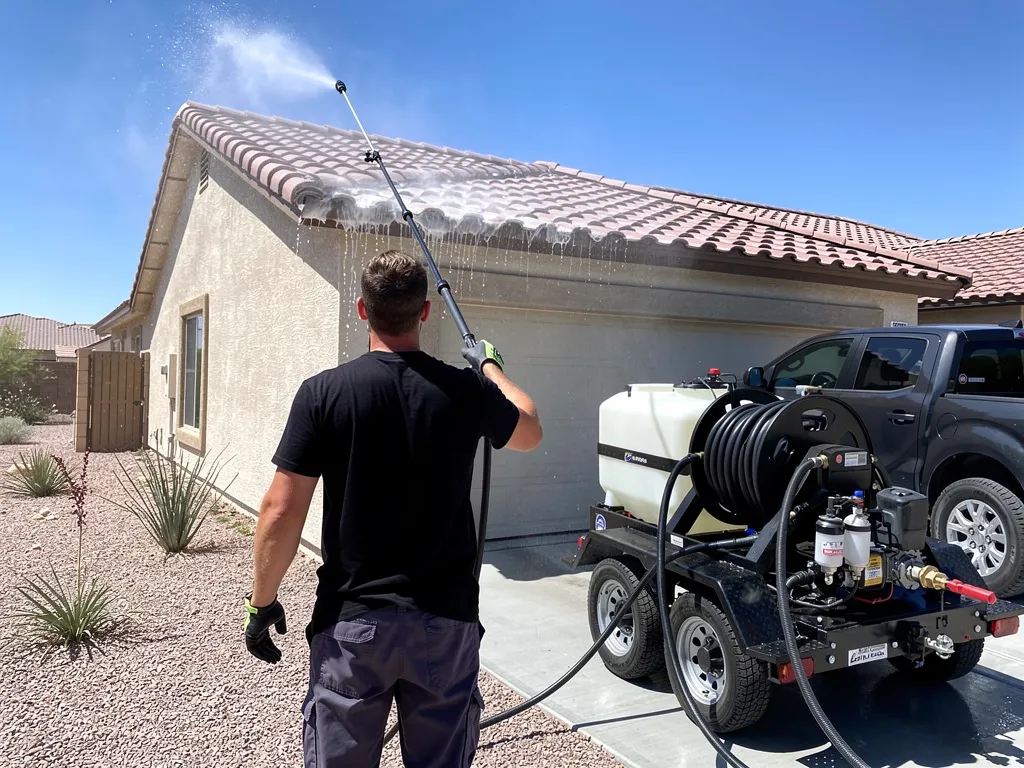
What Is Soft Washing and How Does It Work, Arizona Window Washers’ Soft Washing Compare
Soft washing uses low pressure and specialized cleaning solutions to safely remove dirt, mold, and mildew from delicate surfaces like roofs and painted siding. Traditional pressure washing relies on high-pressure water alone, which can damage softer materials. Arizona Window Washers, a Veteran-Owned and Locally Operated company, employs soft washing for residential exteriors, protecting property finishes while delivering thorough results. The company uses Eco-Friendly Products and Insured and Bonded Technicians, backed by a 100% Satisfaction Guarantee and Competitive Pricing.
What Is Soft Washing and How Does It Work?
Soft washing is a low-pressure exterior cleaning method that removes organic growth and grime through specialized chemistry rather than brute water force. Arizona Window Washers deploys this technique at pressures typically under 500 PSI, relying on cleaning solutions to do the work that traditional pressure washing accomplishes with high-velocity water. The process eliminates mold, algae, mildew, and dirt without risking surface damage to delicate materials.
Arizona Window Washers, a Veteran-Owned and Locally Operated company, uses Eco-Friendly Products formulated to be safe for pets and children. The company’s Insured and Bonded Technicians apply a soap solution containing a wax additive that helps repel dirt for up to six months after treatment. This commitment to quality is backed by a 100% Satisfaction Guarantee and Competitive Pricing. This protective layer extends the time between cleanings and keeps exterior surfaces looking fresh through Arizona’s dusty conditions.
How Does Soft Washing Differ From Pressure Washing?
The fundamental difference lies in the cleaning mechanism. Pressure washing uses water force at 1,300 to 3,100 PSI to blast away debris, according to Angi’s 2026 analysis of exterior cleaning methods. Soft washing operates between 150 and 300 PSI, using biodegradable cleaning solutions to dissolve contaminants at the molecular level. Powerline Industries notes that soft washing is not simply weaker pressure washing; it represents a fundamentally different approach where sodium hypochlorite solutions with surfactants kill organic growth before a gentle rinse carries everything away.
Which Surfaces Benefit Most From Soft Washing?
Delicate exterior surfaces demand the gentler approach that soft washing provides. Stucco, roof tiles, painted siding, and window frames all risk damage under high-pressure spray. Arizona Window Washers recommends soft washing for these vulnerable materials, as the low-pressure application prevents water intrusion behind siding and eliminates the gouging that pressure washing causes on softer substrates. Homeowners who choose pressure washing for these surfaces often face costly repairs from stripped paint, cracked stucco, or loosened roof granules.
| Surface Type | Recommended Method | Risk of Pressure Washing |
|---|---|---|
| Stucco | Soft Wash | Cracking, water intrusion |
| Roof Tiles | Soft Wash | Granule loss, breakage |
| Painted Siding | Soft Wash | Paint stripping, gouging |
| Concrete Driveways | Pressure Wash | Minimal risk |
Arizona Window Washers brings this specialized approach to Scottsdale properties through its soft washing services for Scottsdale homes, protecting the architectural finishes that define the region’s distinctive residential character.
What Is Traditional Pressure Washing and How Does It Work?
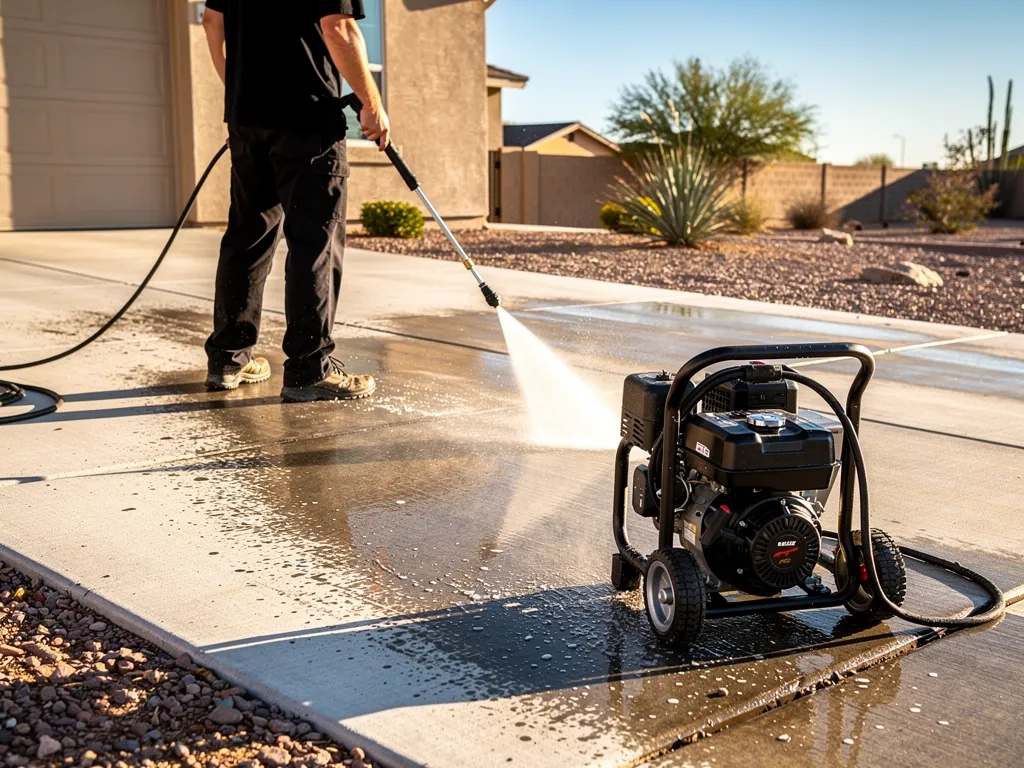
Traditional pressure washing blasts surfaces with high-pressure water to strip away dirt, grime, and stains. The method operates between 1,300 and 3,100 PSI, according to Angi’s analysis of exterior cleaning techniques. This mechanical force physically dislodges contaminants without relying on chemical reactions.
A pressure washer uses PSI and GPM to remove grease, gum, and buildup from hard surfaces. The equipment channels water through a narrow nozzle at extreme velocity. That concentrated stream shears off debris that ordinary rinsing leaves behind.
How Does Pressure Washing Differ from Chemical Cleaning Methods?
Pressure washing depends on raw force rather than cleaning solutions. The water itself does the work. No detergents or surfactants break down the grime. This makes the process fast but limits its safe application to tough materials.
Which Surfaces Handle High-Pressure Washing Safely?
Durable surfaces tolerate the intense spray without damage. Concrete driveways, stone pavers, brick walkways, and pool decks all benefit from this approach. Painted siding, roof shingles, and wood furniture risk gouging or water intrusion under the same force. Arizona Window Washers keeps a pressure washer system ready for stubborn dirt stains on appropriate hardscapes. The company also provides pressure washing or power washing services tailored to each surface type.
| Surface Type | Suitable for Pressure Washing | Risk Level |
|---|---|---|
| Concrete driveways | Yes | Low |
| Brick walkways | Yes | Low |
| Stone pavers | Yes | Low |
| Pool decks | Yes | Low |
| Painted siding | No | High |
| Roof shingles | No | High |
| Wood furniture | No | High |
The wrong pressure setting on a delicate surface causes permanent etching or water damage. Property managers and homeowners lose thousands in repairs when high PSI meets the wrong material. Matching the method to the surface prevents costly structural harm.
How Does Arizona Window Washers’ Soft Washing Compare to Traditional Pressure Washing Services?
Arizona Window Washers selects the cleaning method based on the surface material and the type of contamination present. The company offers both soft washing and traditional pressure washing, deploying each technique where it delivers the safest, most durable result. Choosing the wrong method causes permanent damage. High-pressure water strips paint, gouges soft wood, and forces moisture behind siding. A single misapplication voids material warranties and triggers expensive structural repairs.
The fundamental difference lies in cleaning mechanics. Soft washing operates at low pressure, typically under 500 PSI at the surface, and relies on specialized cleaning solutions to break down organic growth. Pressure washing, by contrast, uses high-pressure water spray between 1,300 and 3,100 PSI to blast away dirt and grime through mechanical force alone. Soft washing kills mold, algae, and mildew at the root. Pressure washing merely removes surface-level debris.
| Feature | Arizona Window Washers Soft Washing | Traditional Pressure Washing |
|---|---|---|
| Pressure Range | Under 500 PSI | 1,300–3,100 PSI |
| Cleaning Mechanism | Chemical reaction kills organic growth | Mechanical force blasts surface dirt |
| Ideal Surfaces | Roof shingles, painted siding, stucco | Concrete driveways, brick, stone |
| Longevity of Results | 4–6 times longer on roofs and siding | Shorter; surface dirt returns faster |
| Risk Profile | Low risk of surface damage | High risk of etching, stripping, and water intrusion |
Why Does Soft Washing Last Longer Than Pressure Washing?
Soft washing results endure 4 to 6 times longer on roof and siding work because the method eliminates living organisms. Pressure washing removes visible stains but leaves microscopic roots intact. Regrowth begins within days. The cleaning solutions used in soft washing penetrate porous surfaces and destroy the biological structure at its source. Arizona Window Washers formulates these solutions with eco-friendly products that are pet- and child-safe, ensuring no toxic residue remains on the property.
Which Surfaces Require Soft Washing Instead of Pressure Washing?
Any surface with a painted finish, asphalt roofing, or aged mortar demands soft washing. High-pressure spray lifts shingle granules, etches stucco, and forces water behind weather barriers. Arizona Window Washers applies soft washing to these delicate exteriors exclusively. The company reserves pressure washing for durable, unpainted hardscapes like concrete patios and stone walkways where mechanical force poses no risk. Every project receives a surface-specific assessment before the equipment leaves the truck.
What Are the Risks of Using High Pressure on the Wrong Surfaces?
High-pressure washing damages delicate exterior surfaces when applied incorrectly. Arizona Window Washers technicians see the costly aftermath of these mistakes across Phoenix and Scottsdale properties every season.
How Does High Pressure Damage Desert Stucco?
Stucco exteriors dominate Arizona architecture. A pressure washer set too high pits and chips this material on contact. The force drives water deep behind the stucco layer, where trapped moisture breeds mold and deteriorates the underlying structure. Protecting delicate desert stucco from pitting and water damage requires low-pressure methods that clean without compromising the surface integrity.
Can Pressure Washing Void a Roof Warranty?
Clay and concrete tile roofs face severe risk from traditional pressure washing. The concentrated spray cracks individual tiles and forces water beneath the underlayment. Once water penetrates that barrier, the roof decking absorbs moisture and begins to rot. Many roofing manufacturers explicitly void warranties when high-pressure equipment causes this type of damage. Safeguarding clay and concrete tile roofs from breakage or underlayment flooding preserves both the roof system and the manufacturer’s coverage.
The risks extend beyond stucco and roofing. Incorrect pressure settings etch concrete driveways with permanent swirl marks. Window seals break down under excessive force, leading to fogged panes and lost energy efficiency. These outcomes share a common cause: uncalibrated equipment in untrained hands.
| Surface Type | Risk from High Pressure | Recommended Approach |
|---|---|---|
| Desert Stucco | Pitting, chipping, water intrusion | Soft washing under 300 PSI |
| Clay/Concrete Tile Roofs | Tile breakage, underlayment flooding | Chemical-only soft wash treatment |
| Concrete Flatwork | Surface etching, permanent scarring | Regulated pressure with proper nozzle |
| Window Assemblies | Seal failure, glass damage | Hand-washing and squeegee techniques |
Professional technicians with calibrated equipment make the difference between a clean surface and an expensive repair bill. Arizona Window Washers trains every technician to match pressure settings and cleaning solutions to the specific material. That expertise prevents the etching, chipping, and warranty issues that plague properties cleaned with generic high-pressure rigs.
What Surfaces Should Never Receive High-Pressure Washing?
Roof tiles, aging stucco, and wood siding top the list of surfaces that demand soft washing instead. Window frames and sealed glass units also require hand-cleaning methods. Any painted surface older than a few years risks peeling under high-pressure spray. The cost of replacing these materials far exceeds the price of proper cleaning from the start.
Why Choose Arizona Window Washers for Your Exterior Cleaning?
Veteran-Owned and Locally Operated, Arizona Window Washers delivers professional exterior cleaning backed by local ownership and rigorous safety standards. The company serves the Phoenix metro area from offices in Scottsdale and Chandler. Insured and Bonded Technicians protect every property from liability risks during service. The company also uses Eco-Friendly Products that are pet- and child-safe, eliminating concerns about chemical exposure around homes and commercial buildings.
Property managers and homeowners lose more than curb appeal when they delay exterior maintenance. Unchecked grime and organic growth accelerate surface deterioration. Arizona Window Washers prevents this damage with a 100% Satisfaction Guarantee on every job. Competitive Pricing keeps costs predictable: the company offers rates that are competitive with other window cleaning providers. A free online quote tool simplifies budgeting, and customers schedule service by phone, text, or online at their convenience.
What safety protections does Arizona Window Washers provide?
Arizona Window Washers carries full bonding and insurance coverage. This shields property owners from financial exposure if accidents occur during cleaning. The company’s technicians follow strict protocols that prioritize both worker and property safety.
How does the company’s pricing compare to competitors?
Arizona Window Washers offers competitive pricing compared to other window cleaning companies. The free online quote tool delivers transparent estimates without obligation. Customers receive clear pricing before any work begins, eliminating surprise charges.
| Feature | Arizona Window Washers |
|---|---|
| Ownership | Veteran-owned, locally operated |
| Insurance | Fully bonded and insured |
| Products | Eco-friendly, pet- and child-safe |
| Pricing | Competitive with competitors |
| Scheduling | Phone, text, or online quote tool |
| Guarantee | 100% satisfaction guarantee |
Arizona Window Washers backs its work with a 3-day rain guarantee. If rain falls within three days of service, the company returns to restore spotless results at no extra charge. This promise reflects the firm’s commitment to dependable outcomes. Customers who explore the company’s distinctive features discover a service model built on accountability and consistent quality.
FAQ
What is the main difference between soft washing and traditional pressure washing?
Soft washing uses low pressure and specialized cleaning solutions to remove dirt and mold, while traditional pressure washing relies on high-pressure water that can damage softer materials.
Which surfaces does Arizona Window Washers recommend for soft washing?
Arizona Window Washers recommends soft washing for stucco, roof tiles, painted siding, and window frames to prevent cracking, water intrusion, paint stripping, and gouging.
How does soft washing protect surfaces after cleaning?
Arizona Window Washers applies a soap solution with a wax additive that repels dirt for up to six months, extending time between cleanings.
Conclusion
Choosing between soft washing and traditional pressure washing comes down to protecting your property’s surfaces from irreversible damage. Soft washing delivers the clean you expect without the risks of pitting stucco, cracking roof tiles, or voiding manufacturer warranties. Professional technicians who match their method to the material ensure your home or business stays spotless and structurally sound for years to come.